Your Ultimate Guide to Winning at Casino Gambling
Casino gambling is the act of wagering money or valuables on games of chance or skill within a licensed establishment, where outcomes are determined by random number generators or mechanical probabilities. Its primary value lies in providing structured entertainment through games like blackjack, roulette, and slot machines, which offer participants the excitement of risk and the potential for immediate monetary reward. To engage, a player simply selects a game, places a wager within the designated limits, and awaits the result based on the game’s defined rules. The core appeal is the direct exchange of risk for the thrill of winning in a controlled, social environment.
The Mathematics of Wagering
The mathematics of wagering in casino gambling is rooted in the house edge, a fixed statistical advantage ensuring long-term casino profit over players. For every bet, the expected value is negative, meaning you mathematically lose a percentage of each wager over time. Blackjack offers one of the lowest edges (under 0.5% with perfect strategy) while slots often exceed 10%. Understanding variance is critical; it explains short-term wins through luck, but the law of large numbers forces results toward the house’s favor. Your bankroll management must align with the bet’s standard deviation to survive losing streaks. Always choose games with the smallest edge and avoid progressive bets like Martingale, which amplify risk without altering the negative expectation.

House Edge and Expected Value
The house edge and expected value define your long-term theoretical loss per wager. Expected value (EV) is the average amount you can anticipate losing per bet, calculated by multiplying each outcome’s probability by its payout and summing the results. The house edge, expressed as a percentage, directly represents the casino’s statistical advantage. To minimize expected losses, focus on games with a lower house edge, which is generally fixed for most standard bets. This advantage compounds over time, meaning the more you play, the closer your actual results will align with the negative expected value. To calculate your anticipated loss:
- Determine the game’s house edge percentage (e.g., 1.4% for blackjack with basic strategy).
- Multiply that decimal by the total amount you intend to wager.
- The result is your expected monetary loss, assuming average luck over many bets.
Probability Distributions in Table Games
In table games, probability distributions in casino gambling dictate the exact likelihood of every hand or roll outcome. For blackjack, a hypergeometric distribution models card depletion from a finite shoe, letting you adjust splits and doubles with precision. In craps, the sum distribution of two dice creates a bell curve where 7 appears most often, guiding optimal pass-line bets. Roulette’s uniform distribution for each number ensures a fixed house edge, but European wheels cut risk. To exploit these patterns:
- Learn the distribution for your chosen game’s core bets.
- Identify outcomes with highest frequency (e.g., 7 in craps).
- Adjust wager size according to the distribution’s variance.
This mathematical framework underpins every strategic decision at the felt.
Calculating True Odds vs Payout Ratios
Understanding the gap between a casino game’s true odds and its payout ratio is the key to calculating the house edge. True odds represent the actual mathematical probability of an event happening, like a 37-to-1 chance on a single roulette number. The payout ratio, however, is what the casino actually pays you for a win, typically 35-to-1. This discrepancy creates a built-in statistical disadvantage that you cannot overcome long-term. Identifying this payout ratio discrepancy across different bets lets you choose wagers with the smallest house edge, such as baccarat’s banker bet versus its tie bet.
Slot Machines and Random Number Generators
Slot machines rely on a Random Number Generator (RNG) to determine each spin’s outcome. This computer chip continuously generates thousands of number sequences per second, even when the machine is idle. When you press the spin button or pull the handle, the RNG selects a number that corresponds to a specific symbol combination. This ensures each spin is independent and unpredictable, making past results irrelevant to future outcomes. Understanding that the slot machine RNG creates true randomness helps players recognize that strategies like pattern tracking or timing bets are ineffective. The house edge is mathematically built into the game’s paytable, not the RNG itself.
RNG Certification and Fairness Audits
To ensure fair play, slot machines rely on independent RNG certification from specialized testing labs. These auditors verify that the Random Number Generator produces statistically unpredictable outcomes, with no patterns favoring the house beyond the stated return-to-player (RTP) rate. Certification involves months of live-game simulations and code analysis to confirm the RNG remains tamper-proof after deployment. Fairness audits then periodically re-test the hardware and software, ensuring no subtle drift or manipulation has occurred.
- Approved labs like GLI or BMM test RNG seed values and output cycles for true randomness.
- Audits examine payout tables against actual recorded results over millions of spins.
- Certified seals must be visible on the machine or in-game help menu for player verification.
Volatility and Return-to-Player Percentages
Understanding volatility and return-to-player percentages is crucial for any slot player. RTP, typically 92–98%, indicates the theoretical payout over millions of spins; a 96% slot returns $96 per $100 wagered long-term. Volatility dictates risk: low volatility pays small, frequent wins to sustain your bankroll, while high volatility offers bigger but rarer payouts, demanding patience and a thicker bankroll. Combine both metrics: chase high RTP for better value, then select volatility matching your playstyle—conservative or aggressive.
Q: How do I profit from volatility and RTP?
A: You can’t profit long-term, but you maximize entertainment. Pick high-RTP slots (96%+) to bleed slower, and align volatility with your session goal—low for longevity, high for big-hit potential. Both inform your bankroll strategy and session length.
Progressive Jackpot Mechanics
Progressive jackpots in slot machines aggregate a small percentage of each wager into a shared prize pool, creating a rapidly escalating top-tier payout. This pool increases independently of a single machine’s internal random number generator (RNG) cycle, meaning any spin can trigger the jackpot regardless of the base game’s hit frequency. The RNG determines if the jackpot event occurs by selecting a specific random number that corresponds to a winning condition, often linked to a second-screen bonus or a specific symbol combination. Understanding this mechanic is critical because the odds of winning a progressive jackpot are fixed and extremely long, unaffected by the current jackpot size or the number of spins performed.
Live Dealer Versus Digital Platforms
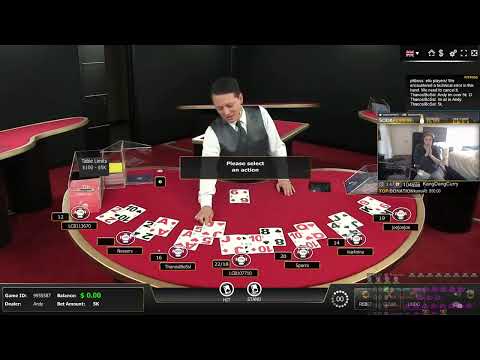
In casino gambling, the core clash between live dealer and digital platforms is authenticity versus speed. With a live dealer, you get real-time human interaction and a physical wheel or cards streamed from a studio, replicating a land-based casino’s tension. Digital platforms, however, use RNG to deliver lightning-fast rounds and unlimited seat availability, perfect for grinding. A pivotal distinction is that live dealer games force a fixed pace, while digital versions let you skip to the next hand instantly. For a real edge, note that digital platforms often offer lower minimum bets and higher RTP than their live counterparts, making them more economical for prolonged play. Ultimately, choose live for social thrills or digital for pure, uninterrupted action.
Streaming Technology and Game Integrity
Live dealer streams hinge on low-latency video integrity to prevent any delay between the physical card shuffle and your screen. Multiple HD cameras offer dynamic angles, letting you spot the exact moment the dealer tosses the dice or burns a card. This real-time verification directly counters digital RNG skepticism, as you watch physical equipment in action. A broken stream or skewed frame instantly breaks trust, making seamless, high-frame-rate transmission the backbone of fair play.
Streaming technology locks game integrity to physical action, letting you see each card and spin as it actually happens, not as an algorithm decides.
Social Interaction in Real-Time Play
In live dealer settings, social interaction in real-time play occurs through a chat interface with the dealer and, sometimes, other players, creating a shared experience absent from digital platforms. Real-time social dynamics influence pacing and engagement, as the dealer can respond to comments or celebrate wins publicly. This interaction is inherently asymmetrical, favoring randomness over structured conversation. Digital platforms replace this with solitary gameplay or asynchronous emojis, stripping away the communal pressure and camaraderie. The presence of visible, human responsive behavior directly alters player risk tolerance and session length, contrasting sharply with the isolated algorithmic pace of automated games.
Social interaction in real-time play differentiates live dealer games by introducing immediate, unpredictable human feedback, which builds a shared narrative absent from isolated digital platforms.
Mobile Optimization and User Experience
In live dealer platforms, mobile-first interface design ensures real-time video streams and betting buttons remain responsive and lag-free on small screens, while digital platforms prioritize simplified touch gestures for slot navigation and one-tap bet adjustments. The disparity in latency tolerance means live dealer games demand robust bandwidth optimization, unlike digital slots which tolerate minor delays.
- Live dealer interfaces require split-second touch responsiveness to match dealer actions.
- Digital platforms utilize adaptive scaling for seamless portrait-to-landscape switching.
- Both must minimize data consumption via compressed assets without sacrificing visual clarity.
Psychology Behind Risk-Taking Behavior
Casino gambling exploits the psychology of intermittent reinforcement, where unpredictable wins create a powerful dopamine loop, compelling you to chase the next reward. This near-miss effect, where you almost win, tricks your brain into treating failure as progress, increasing risk-taking. Ironically, the illusion of control over purely random outcomes often fuels the most reckless bets. The gambler’s fallacy—believing a loss streak makes a win “due”—directly distorts your risk assessment. To counter this, recognize that your brain’s reward system is being actively manipulated; set strict loss limits before playing to bypass this emotional hijacking. Accepting the house edge intellectually is less effective than feeling its weight emotionally once you walk away.
The Near-Miss Effect and Dopamine Response
When you almost hit a jackpot on a slot machine, your brain treats that near-miss effect and dopamine response almost like an actual win. Dopamine fires off, making you feel excited and motivated to keep playing, even though you technically lost. This tricks you into thinking you’re getting “close” and that a win is just around the corner. In casino games, this effect keeps you spinning longer, because the near-miss feels more encouraging than a total fail, fueling the cycle of risk-taking without you realizing it.
Illusion of Control in Strategic Games

In strategic casino games like blackjack or poker, the illusion of strategic decision-making fuels risk-taking by convincing players their choices influence random outcomes. Selecting when to hit or fold creates a false sense of control, masking that the house edge persists regardless of skill within a single hand. This cognitive bias leads gamblers to overvalue minor decisions, increasing bet sizes as they believe they can outplay inherent probabilities. The perceived agency directly escalates exposure to loss, as players chase validation of their non-existent mastery over chance.
Q: Why does the illusion of control persist in strategic games despite clear statistical odds?
A: Because players receive intermittent positive reinforcement—winning a few hands feels like direct proof of skill, while losses are dismissed as bad luck, reinforcing the false belief that their choices temporarily override randomness.
Chasing Losses and Sunk Cost Fallacy
The **chasing losses** cycle exploits the sunk cost fallacy, where gamblers irrationally continue betting to recover money already lost. In casino gambling, this manifests as doubling bets after a loss, believing that past investment justifies further risk. The cognitive distortion stems from emotional commitment to lost funds, overriding probability logic. A player who loses $200 may bet $400, not for potential gain, but because the prior loss feels like a trap demanding escape. This compulsion ignores that each spin or hand has independent odds; past losses carry no predictive value. The fallacy ensures players inject more money, treating casino sessions as recoverable debts rather than isolated events.
Q: How does the sunk cost fallacy directly fuel chasing losses in casinos?
A: It tricks the brain into treating lost money as an investment that must be recouped, rather than accepting it as a spent cost. This leads to escalating bets to reclaim lost funds, despite worsening odds with each wager.
Regulatory Landscape Across Jurisdictions
A gambler’s practical reality hinges on the dramatic variance in legal protection across borders. In one jurisdiction, a missed jackpot payment is a criminal offense; in another, it is simply a house rule you agreed to. You must verify your physical location at every single wager, as laws follow your IP address, not your account history. Land-based rules might offer clear, enforceable debt collection, while online play often leaves you without that legal recourse. The only safe bet is assuming that no regulatory body from a foreign country will intervene on your behalf; if a site blocks you or refuses a payout, your local consumer laws likely do not apply.
Licensing Bodies and Compliance Standards
Licensing bodies, such as the UK Gambling Commission or the Malta Gaming Authority, set specific compliance standards that casinos must meet to operate legally. For a player, a valid license ensures the casino uses certified random number generators and holds player funds in segregated accounts. Compliance mandates regular audits of payout rates and data protection protocols. If a site displays a license but lacks a visible seal or audit certificate, its compliance status is suspect.
Q: How can I verify a casino’s compliance with licensing standards? Cross-reference the license number on the issuing body’s official website. If the number isn’t found or the site’s security certificate is missing, the casino likely fails compliance requirements.
Anti-Money Laundering Protocols
To safeguard your assets, automated transaction monitoring systems now flag irregular betting patterns in real time, forcing immediate source-of-funds verification. You must provide documented proof—such as bank statements or tax returns—for any cash transaction above a threshold, often €10,000. Failure results in frozen winnings and a mandatory suspicious activity report. The typical protocol sequence is:
- Deposit triggers a system alert if it deviates from your play history.
- You receive a secure link to upload verification documents.
- Compliance officers review the data within 24 hours, releasing funds only after clearance.
This process ensures no unverified funds exit the casino ecosystem.
Age Verification and Geolocation Checks
Before placing any real-money wager, you must pass strict geolocation verification to confirm you are physically within a permitted jurisdiction. This process uses your device’s GPS and IP address to block access from restricted areas, such as state lines or national borders. Simultaneously, age verification systems cross-check your government-issued ID against public records, preventing underage play. These checks happen at account creation and periodically during sessions, often requiring you to enable location services. If either check fails, the gambling interface will immediately lock the game and refuse any deposit or bet.
Bankroll Management for Long-Term Play
Effective bankroll management for long-term play in casino gambling is the single factor separating recreation from ruin. Always set a fixed, disposable amount you can lose without consequence, dividing it into session-sized stakes. The foundational rule is to never risk more than 1–2% of your total bankroll on a single bet, which protects against catastrophic downswings. Winning sessions do not justify increasing your base bet size; instead, lock profits separately and only withdraw them. For games with high volatility, like slots or craps, allocate smaller percentages per spin or roll. Strictly enforce time and loss limits for each session to avoid chasing. Without this discipline, variance will inevitably deplete your funds, making long-term play impossible. This systematic approach ensures you can survive losing streaks and capitalize on favorable variance when it arrives.
Setting Loss Limits and Session Caps
Setting firm loss limits and session caps is your primary defense against emotional spiral in casino gambling. Before you sit down, decide the exact amount you are willing to lose and stop playing the moment that number hits, no exceptions. Pair this with a strict time limit—when the timer ends, you walk away regardless of wins or losses. This dual boundary prevents chasing losses and preserves your bankroll for future sessions, making long-term play sustainable.
- Pre-set a daily loss limit (e.g., 20% of your bankroll) and lock it in your mind before any spin or hand.
- Use a physical timer or alarm on your phone to enforce session caps; do not browse for “just one more round.”
- Never adjust your loss limit upward during a session—this signals tilt, not strategy.
- Log your actual stop time and loss amount afterward to hold yourself accountable.
Bet Sizing Based on Available Funds

Bet sizing based on available funds means you never wager more than a tiny slice of your total bankroll in one go. A safe rule is to bet no more than 1% or 2% of your cash on a single spin or hand. If you have $500, your wager stays between $5 and $10, protecting you from rapid losses. This approach, often called proportional betting, lets you survive losing streaks without going bust. Stick to this percentage method, and your funds last longer, giving you more play without the stress of big swings.
Avoiding Emotional Decision-Making
Avoiding emotional decision-making is crucial to protecting your bankroll over the long haul. After a big win, the urge to chase even bigger bets can be intense, but this often leads to giving back all your profits. Similarly, after a loss, the desire to “win it back” quickly is a fast track to ruin. Stick to your predetermined stop-loss and win limits, no matter how you feel. Stick to your pre-set limits like they are law, because one impulsive, emotional bet can undo hours of smart, disciplined play. Keep your head clear, and treat your bankroll as a resource for entertainment, not an emotional battleground.
Popular Table Games and Strategy
Blackjack relies on basic strategy, where you always split aces and eights and stand on a hard 17 or higher. Craps offers better odds with Pass Line bets, but avoid the high-house-edge “Proposition” bets in the center. In roulette, a Martingale system—doubling after a loss—can be risky with table limits; smart players stick to outside bets for nearly 50% win chances. For poker variants like Three Card, fold weak hands (less than Queen-high) and bet aggressively with a pair or better.
Blackjack Basic Strategy Charts
A Blackjack basic strategy chart is a mathematically derived grid that dictates the optimal play—hit, stand, double down, or split—for every possible combination of your hand versus the dealer’s upcard. By consulting the chart, players reduce the house edge to under 0.5% in standard rules. The chart’s cells are coded for hard totals, soft totals, and pairs, requiring memorization or a printed reference at the table. Deviation from the chart increases the casino’s long-term advantage.
- Always split aces and eights; never split tens or fives.
- Stand on hard 17 or higher; hit on hard 12–16 when dealer shows 7+.
- Double down on hard 11 against any dealer upcard except an ace.
Roulette Betting Systems and Their Flaws
Roulette betting systems, like the Martingale, attempt to exploit perceived patterns in independent spins, but each spin’s outcome remains statistically isolated. The Martingale’s flaw is exponential bet doubling after a loss, which quickly hits table limits or depletes a bankroll against a negative expectation. The Fibonacci system fails similarly, as consecutive losses cancel potential gains. The D’Alembert’s incremental adjustments cannot overcome the house edge from the zero pocket. These casinous systems provide a false sense of control; no progression alters the inherent 5.26% house advantage on double-zero wheels. No betting system overcomes the house edge. Q: Can any roulette system guarantee long-term profit? A: No—all systems are mathematically destined to lose over time due to the fixed house advantage.
Poker Variance and Position Play
In poker, mastering positional awareness directly tames variance by allowing you to act last. From the button, you exploit opponents’ earlier reveals, folding weak hands cheaply and extracting value when strong. This reduces the luck factor over time. To manage variance efficiently at the table:
- Play more hands from late position, widening your range.
- Fold marginal holdings early; avoid chasing draws out of position.
- Use position to control pot size, raising or calling based on opponent tendencies.
Bonuses and Promotional Offers
In casino gambling, bonuses and promotional offers are tools that extend your playtime but carry critical terms. Always scrutinize the wagering requirement—the multiplier you must bet before withdrawing bonus funds. A 35x requirement on a $100 bonus means you must wager $3,500 total. Prioritize low-wagering or no-wager offers on slots, as other games often contribute less (e.g., 10% for table games).
Match your playstyle to the offer: high-volatility slots suit cashable bonuses, while low-risk bets only work with sticky bonuses that cannot be withdrawn.
Reload bonuses and cashback on losses are optimal for regular players, but strictly avoid any offer with a max cashout cap, as it nullifies your potential wins.
Wagering Requirements Explained
Wagering requirements dictate how many times you must play through a bonus before withdrawing winnings. A 30x requirement on a $100 bonus means you need to wager $3,000—this is a key factor in a bonus’s real value. Lower wagering, like 10x, is far better, while games like slots often contribute 100%, but table games may count far less. Always check the contribution rate per game to avoid wasting your play. Compare offers using the table below to spot the most player-friendly terms.
| Bonus Amount | Wagering Requirement | Total Wagering Needed |
|---|---|---|
| $50 | 35x | $1,750 |
| $50 | 10x | $500 |
Match Deposits and Free Spins
Match deposits and free spins function as linked incentives within casino gambling. A match deposit multiplies a player’s initial cash, often via a 100% or 200% bonus, while free spins grant wagering credits on selected slot titles. The practical relationship lies in the wagering requirements: both the deposit match and any winnings from free spins typically must be played through multiple times before withdrawal. This structure ensures bonus value hinges on turnover conditions. Analyzing the terms, a higher match percentage often pairs with stricter playthrough limits on spin profits, requiring a strategic assessment of whether the free spins’ volatility aligns with the deposit boost’s cash-out feasibility.
Loyalty Programs and VIP Tiers
Casino loyalty programs reward your play with points that unlock tangible perks, from free spins to cashback. However, ascending to exclusive VIP tier benefits transforms your experience entirely. Higher tiers deliver dedicated account managers, faster withdrawals, personalized bonuses, and luxury gifts like electronics or event tickets. The table below clarifies the escalating value.
| Feature | Standard Loyalty Program | VIP Tier |
|---|---|---|
| Reward Rate | Fixed points per wager | Accelerated point multipliers |
| Withdrawals | Standard processing times | Priority, same-day payouts |
| Bonuses | Generic match offers | Custom, high-limit bonuses |
| Support | Chat or email | Personal account manager |
Climbing tiers directly raises your floor—better comps, higher betting limits, and exclusive access to tournaments. Every wager contributes to your status, making each spin or hand a step toward superior rewards.
Responsible Gaming Tools and Support
Responsible Gaming Tools for casino gambling include deposit limits, loss limits, session time reminders, and self-exclusion options, all accessible directly within your account settings. These tools allow you to set personal boundaries before you start playing, preventing impulsive decisions during a session. If you need further support, most casinos provide direct links to professional helplines. Question: How do I set a deposit limit? Answer: Navigate to your account’s responsible gaming or self-limitation section, select a daily, weekly, or monthly cap, and confirm the amount; this limit cannot be raised for at least 24 hours. Support services, such as live chat with trained advisors, are also available to help you review your gambling habits or activate a cooling-off period.
Self-Exclusion Programs
Self-exclusion programs offer a concrete, enforceable step for regaining control over casino gambling. By voluntarily banning yourself from specific venues or online platforms for a set period, you create an immediate barrier against impulsive play. These agreements are legally binding, making subsequent entry or account access a violation. This tool interrupts harmful patterns, providing the necessary distance to rebuild healthier habits without relying solely on willpower. Committing to voluntary casino bans is a powerful act of self-preservation, not a sign of failure, placing your long-term well-being firmly ahead of temporary urges.
Reality Checks and Session Timers
Reality Checks are on-screen pop-ups that discreetly interrupt your gameplay to display your session duration and net losses, forcing a moment of awareness without locking you out. Session Timers take this further by letting you set a hard stop, after which the platform automatically logs you off. To leverage both effectively, follow this sequence: set a pre-session timer before any spin;
- adjust your Reality Check interval (e.g., every 15 or 30 minutes) in account settings
- respond honestly to each pop-up—review time and money spent
- let the Session Timer enforce your limit to prevent tilt-driven play
These tools inject a steady pulse of reality, turning a blur of action into structured, mindful engagement.
Hotlines and Counseling Resources
When the thrill of the casino floor starts to feel like a personal crisis, dedicated hotlines offer an immediate, anonymous lifeline. These services are staffed by trained counselors who specialize in gambling-related distress, providing immediate crisis support for gambling addiction without judgment. You can find these resources through national networks or casino-operated “GameSense” centers, which also offer referrals to long-term therapy. Q: Are counseling resources really confidential? A: Yes, all accredited hotlines and licensed counselors operate under strict privacy laws, ensuring your conversations about your gambling habits remain completely private and off the record.
What Exactly Is Casino Gambling and How Does It Work?
Understanding the core concept: risking money on games of chance